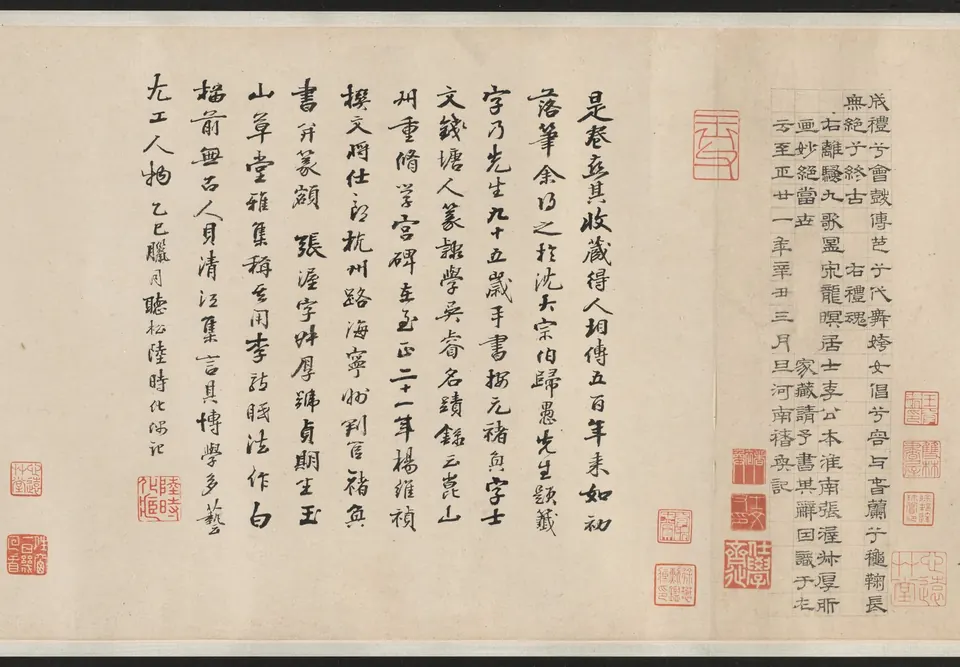
Cleveland Museum of Art · 1959.138 · CC0 public domain · museum page
Learn
Chinese Artist Chop: A Name Seal for Paintings
Updated 2026-11-13
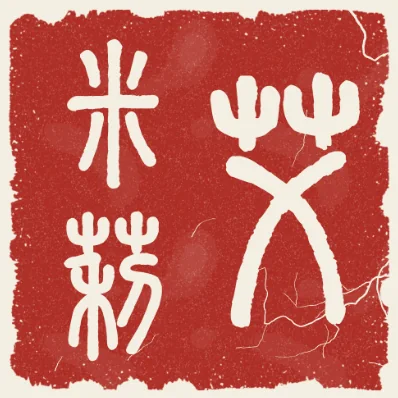
An artist chop is a small seal carved with your name, pressed into red paste and stamped on your painting. Most Chinese paintings carry small red seal impressions, some at the edges and some in the picture itself, and they show who painted the work or who owned it[1]. Artists used seals to sign their art, and collectors stamped the works they owned[2]. If you paint in ink, watercolour or print, a chop of your own finishes a piece the same way. This page covers where it goes, how to make one with your name, and how to have a real one carved.
Where an artist chop goes on a painting
These placements come from a seal-carving seminar given to a Chinese brush-painting society in Texas[3]. Treat them as habits, not rules.
- Name seal (名章): below the poem and signature. If you use two name seals, balance them: one white text and one red text, about the same size, at least one seal’s width apart. Name seals are usually square.
- Leading seal (引首章): at the top right, answering the signature. It is often a natural shape such as an oval or a long rectangle.
- Corner seal (压角章): on a lower corner, to lower the picture’s centre of weight and steady it. Usually square or rectangular.
- Leisure seals (闲章): leading and corner seals belong to this family, along with others; they carry a phrase the artist likes rather than a name[3]. A leisure seal usually holds an idiom or a line of poetry[4].
Old works can hold many seals. Cleveland’s handscroll Nine Songs, dated 1361, carries 47 seals, 28 of them belonging to the calligrapher Chu Huan[5].
Make your chop in the seal studio
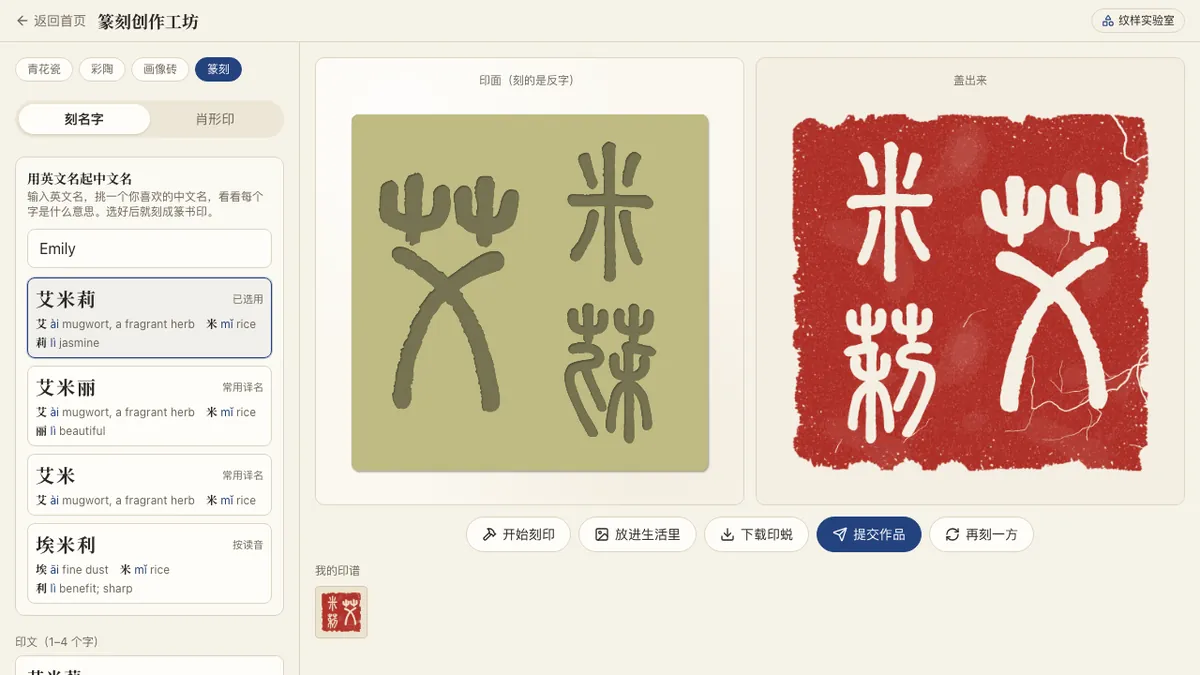
- Your name in Chinese: open the seal studio and type your English name. You get Chinese renderings by sound, with the pinyin and a plain meaning for each character. Already have a Chinese name? Type the characters instead.
- Shape and style: square suits a name seal; an oval or a tall rectangle suits a leading seal. Make both red and white text and compare.
- Carve it: the studio carves it in reverse on the stone, the way a seal is cut, and prints it. It goes into your seal album.
- Try it on your painting: open Sign your painting, add a photo of your work, and place your name seal, a leading seal and a corner seal. Drag and size each one until the picture balances. Your photo stays in your browser.
Having a real chop carved from your files
Taking the seal away gives you every file a carver needs: the impression as PNG and SVG, right-reading black-and-white artwork, and mirrored carving files whose seal face is exactly 10, 15, 20 or 25 mm on its longer side (SVG in millimetres, PNG at 300 dpi). The characters on a seal face are reversed, so that they print the right way round[6].
- Pick a size. Measure the signature on a typical painting and choose a face that sits comfortably beside it.
- Ask your carver which artwork they want. Some want the design right-reading and reverse it themselves; others, especially for laser engraving, want it mirrored. Send the matching file at the size you chose, and say whether it is red text or white text.
- Ask for a proof first. Carvers sketch the design on paper before they cut it into the stone in reverse[7]; ask to see that sketch.
- Choose the material: a hand-carved stone seal, or a laser-engraved rubber or wood stamp.
- Stamp with seal paste. Traditional red paste is made from powdered cinnabar, moxa fibre and oil[8].
We don’t carve or sell physical seals, and we don’t recommend any one shop: any seal carver, stamp maker or laser engraver can work from these files.
Price
Every studio can be tried first, with a watermark on the result; taking a work home without it is $4.90. To teach, buy a lesson ($12) or the annual pass ($59 a year: every lesson, and every work without the watermark). New accounts get 60% off in their first hour. See pricing
Font and licence
Name seals are drawn with Chongxi Seal Script by Academia Sinica, licensed CC BY-ND 3.0 TW, which requires attribution and does not allow the glyphs to be changed[9]. YinSeal only scales each glyph evenly to fit its cell. When you sell or publish work bearing the seal image, credit the font as our Terms describe, for example: "Seal script: Chongxi Small Seal (崇羲篆體), Academia Sinica, CC BY-ND 3.0 TW".
Artist chops: common questions
- What is an artist chop?
- A small seal carved with your name, pressed into red seal paste and stamped on your work, usually below your signature. On Chinese paintings, seals show who made a work or who owned it.
- Where do I stamp my chop on a painting?
- A name seal goes below your signature. A leading seal can sit at the top right and a corner seal on a lower corner. These are habits rather than rules: place the seal where the picture feels balanced.
- I don’t read Chinese. How do I get a name?
- Type your English name in the seal studio. It offers Chinese renderings by sound, with the pinyin and a plain meaning for every character. Ask someone who reads Chinese to check your choice before you carve it in stone.
- Can I have a real stone chop carved from my design?
- Yes. When you take the seal away you get mirrored carving files at exactly 10, 15, 20 and 25 mm, plus right-reading artwork. Send the file your carver asks for. We don’t carve or sell physical seals ourselves.
- Do I need to credit anything when I sell work with my chop?
- Name seals are drawn with the Chongxi Seal Script font from Academia Sinica, licensed CC BY-ND 3.0 TW. Our Terms ask you to credit the font when you sell or publish a seal image made with it, for example on your website or the certificate that goes with a painting.
Type your English name to get a Chinese name, carve it in red or white text, then stamp it on a photo of your work.
Sources
- University of Washington, A Visual Sourcebook of Chinese Civilization (Patricia Buckley Ebrey): Technical Aspects of Painting (read 2026-11-13)
- Virginia Museum of Fine Arts, Create a Chinese Seal (Internet Archive copy, 2025-03-18) (read 2026-11-11)
- Art Virtue, Chinese Seal Seminar: Introduction to Seal Style Chinese Calligraphy and Seal Carving (for The Association of Oriental Arts, Irving, Texas, 2006) (read 2026-11-13)
- St. Olaf College, The Chinese Scholar's Studio: Seals (read 2026-11-13)
- Cleveland Museum of Art, Nine Songs, 1959.138 (read 2026-11-11)
- Asian Art Museum (San Francisco), Make Your Own Seal Script Stamp (read 2026-11-11)
- UNESCO Intangible Cultural Heritage, Art of Chinese seal engraving (2009) (read 2026-11-12)
- Smithsonian National Museum of Asian Art (Freer), Seal paste container and stand, F1980.89a-f (read 2026-11-11)
- Academia Sinica, Chongxi Seal Script (崇羲篆體) licence (read 2026-11-11)