Lesson
Lunar New Year Art Lesson: Carve a Name Seal
Updated 2026-11-12
This Lunar New Year art lesson treats the Spring Festival as a working system of visual communication. Students learn how 2027 gets its name, what a Chinese seal does, and how festival images turn wishes into pictures through puns and symbols. Then they carve a name seal, design a blue-and-white gift plate that carries one wish, stamp the seal on it as a signature, and hand both in to a class 3D gallery. It is written for university, art-school and adult classes, as one 75–90-minute class or a 3-hour studio.
| Learners | Undergraduates, art and design students, adult learners (18+) |
| Time | One 75–90-minute class, or one 3-hour studio that splits over two meetings |
| When | Any time of year. The 2027 festival season runs from 6 to 20 February[1] |
| Tracks | Intro / Foundation and Studio / Advanced |
| Students make | A name seal, a gift plate signed with it, a scene image, a short "decoder" caption and a rationale |
| You get | Lesson plan, 15-slide outline, two-page student brief, rubric, course-fit notes and a sourced fact file |
What students learn in this Lunar New Year art lesson
The calendar. The Year of the Goat, Ding-wei (丁未), begins on Saturday, 6 February 2027[1]. Years are named by pairing ten heavenly stems with twelve earthly branches, a cycle that repeats every 60 years[2]. English can’t settle on goat, sheep or ram because the Chinese word 羊 covers both goats and sheep[3]; the Hong Kong Observatory says Goat, Britannica says sheep, and the Asian Art Museum says Ram[1][4][5]. Even the start of the year has two authorities: official calendars use the first day of the first lunar month, fortune-tellers often use Spring Commences[6]. More in our Year of the Goat 2027 guide.
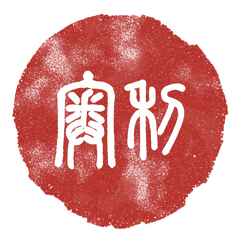
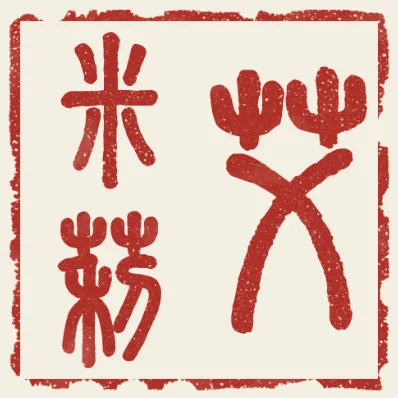
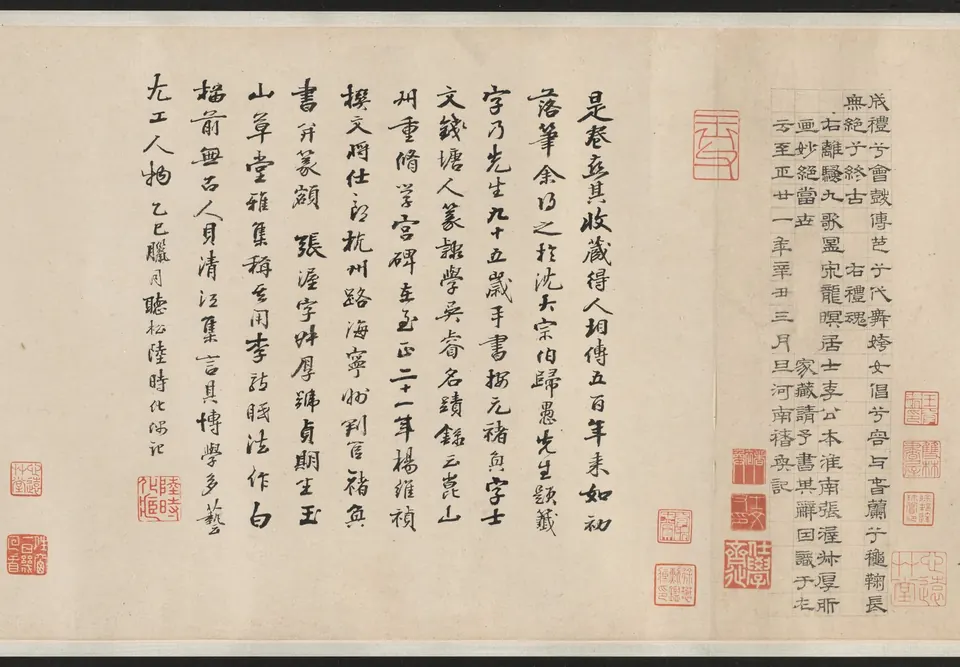
The seal. Seals were used "by artists and authors to sign art, letters, and official documents but also by art collectors to document works in their collections"[7]. They accumulate: Cleveland’s Nine Songs handscroll, dated 1361, carries 47[8]. Zhuwen seals print red characters, baiwen seals print white ones on red[7], and an asymmetric character has to be carved in reverse to print the right way round[9].
Auspicious imagery. Students learn the mechanisms before the motifs. A rebus: fish (yu 魚) is "a pun for abundance (yu 餘)", and the bat (蝠 fu) stands for blessings (福 fu)[10]. An attribute: the plum, "the first to bloom" in the cold season, stands for perseverance and purity[11]. Text as image: the character 福 on red envelopes[12]. A context rule: 囍, "double happiness", belongs to marriage[13]. Three goats on the Met’s 15th-century embroidery Welcoming spring evoke 三陽開泰, "three suns welcome spring", a New Year wish[3].
The learning outcomes cover the calendar, what a seal does and how it is built, decoding and building auspicious images, and written justification; advanced students also argue a position on translation and appropriation.
What students make
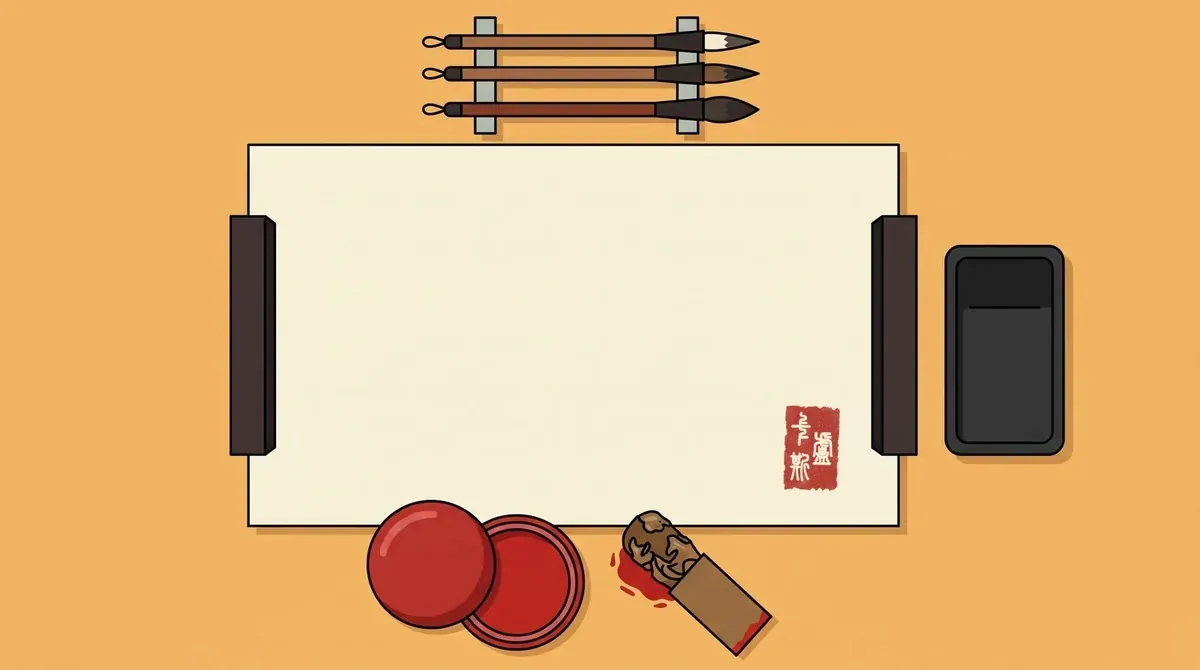
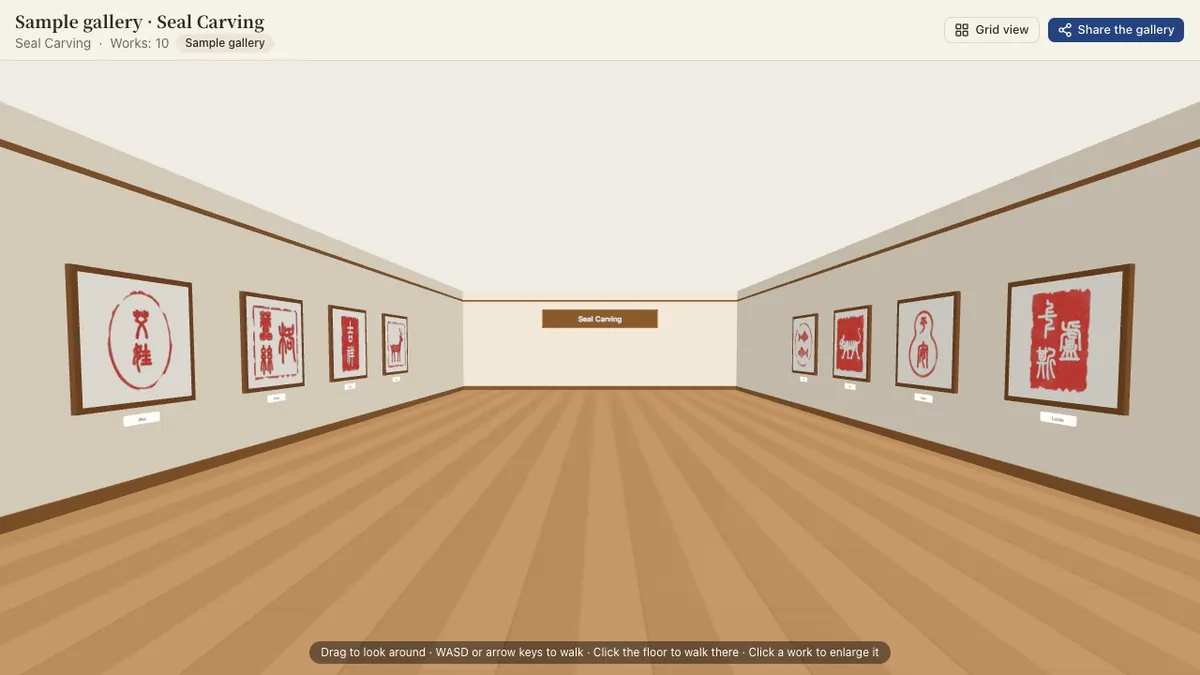
Part 1: a name seal. Students type their English name and choose from its usual Chinese renderings. Each character is shown with its pinyin and a plain meaning, and the brief asks students to confirm what their characters mean. Students who already have a Chinese name type it in directly. They choose a shape (square, rectangle, round, oval, gourd or a Qin-style grid) and red or white characters, then carve: the studio shows the reversed stone and the print side by side.
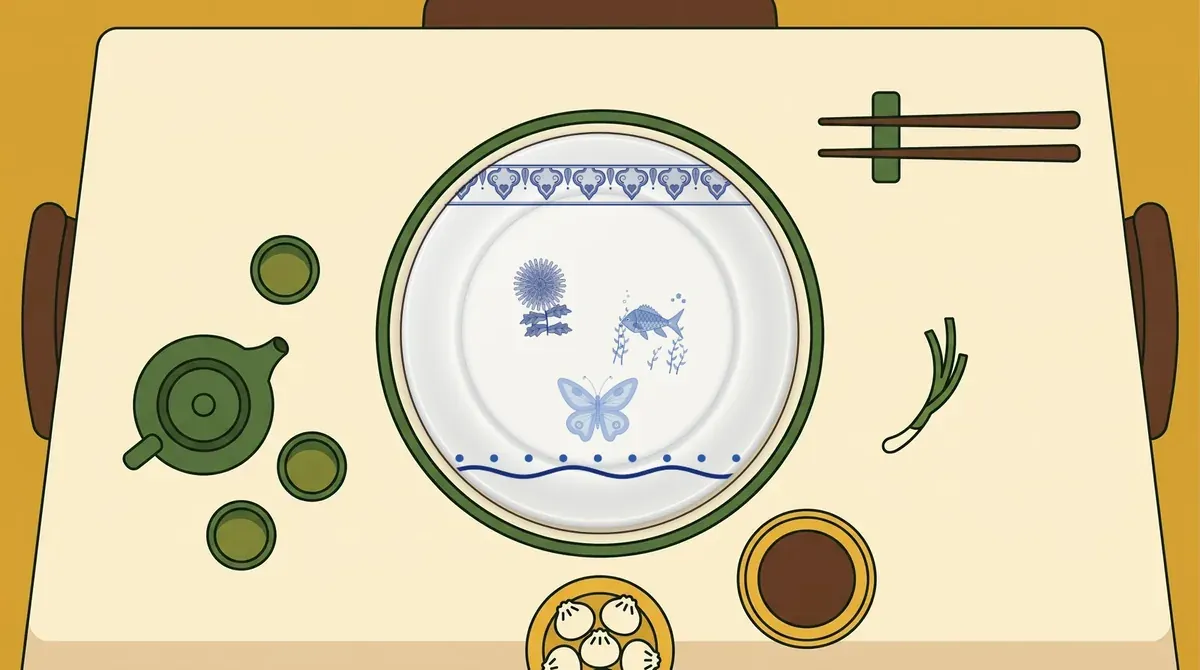
Part 2: a gift plate. One recipient, one wish, at least two mechanisms. Library motifs with documented meanings include fish and waterweed, twin fish, peony and plum; goats, bats and peaches can be drawn with the brush. Students stamp their seal on the plate as the maker’s mark, place it in a scene and hand it in.
Part 3: the decoding test. In the gallery, classmates write down what they think each gift says before they read the maker’s caption. The gap between intended and received message drives the critique.
The class preset "Lunar New Year 2027 lesson" sets up both studios in one class, in order: carve the seal, paint the plate, stamp it. Students join with a link and a nickname; nobody needs an account.
On the advanced track, students test the seal in red and white and in two shapes, extend it into a studio mark or letterhead, and write a 300–450-word position statement, for example on whether a sound-based Chinese name is a translation, a new identity or a costume.
Where this Lunar New Year art lesson fits
- Typography, lettering and identity design: a mark with strict constraints, and the Qin standardization of small-seal script as an early state type standard.
- Graphic and communication design: visual rhetoric, designing one image for two audiences.
- Printmaking: zhuwen and baiwen as relief versus incised printing; an extension carves the seal by hand.
- Asian art history, visual culture, design ethics, Chinese language and culture, and seasonal adult workshops.
It is not a course in seal carving as a craft discipline, it does not teach ritual practice, and it does not present zodiac "personality" readings as fact. For background on the seal itself, see the Chinese name seal guide.
What’s in the lesson pack
- Lesson plan. Timings for both formats, setup in YinSeal, ten discussion questions, the decoding-test critique protocol, notes for students who already have Chinese names, and a five-criterion rubric weighted separately for each track.
- Slide outline. 15 slides, with open-access museum images labelled by museum and accession number.
- Student brief. Two pages: planning tables for the seal and the gift, thumbnails, a decoder-caption box and a reflection page.
- Course-fit notes for eight kinds of course.
- Facts and sources. 42 entries with verbatim quotes and links, and a list of 20 popular claims we could not verify and kept out, including "Fire Goat" and the idea that Han inscriptions wrote 吉祥 as 吉羊.
- Cultural respect notes: naming the festival, not assuming students observe the zodiac, choosing name characters with care, and using non-toxic ink, because traditional seal paste is made with cinnabar[14], mercury sulfide[15].
Preview the lesson pack
Headings only. The full lesson plan, slides and student brief come with the lesson.
Step by step, with timings
- Before class: set up YinSeal (10 minutes)
- Opening: "What year is it?" (8–15 min)
- Context (17–35 min)
- Decoding exercise (10–20 min)
- Studio part 1: the name seal (15–30 min)
- Studio part 2: the New Year gift (20–40 min)
- Decoding test and critique in the gallery (15–25 min)
- Close and assign (5 min)
Lesson plan sections
At a glance · Overview · Tracks · Time and formats · Materials and setup · Learning outcomes · Key terms · Background for the instructor · Step by step · Discussion questions · Critique protocol: the decoding test · Differentiation · Assessment rubric · Extensions · Further reading · Cultural respect notes
Slides (15)
- Signs, Seals and Wishes
- What year is it?
- How a year gets its name
- Goat, sheep or ram?
- A festival made of signs
- Whose New Year?
- The seal: a signature in stone
- Seals accumulate
- The grammar of a seal
- Stone and paste
- How a wish becomes an image
- Three goats: 三陽開泰
- Right symbol, wrong occasion
- Your brief
- The decoding test
Price
There is no trial of the lesson pack; the sample seals, plates and sample gallery on this page show what students produce, and you can try the seal and plate studios yourself in preview (with a watermark) before you buy. After payment you get the full lesson pack and can open a class straight away.
One lesson
$12
$4.80 if you buy in your first hour
- Lesson plan, slides and student brief for this lesson
- Run it with as many classes as you like, each with a 3D gallery
- Yours to keep, with no expiry
Annual pass
$59/year
$23.60 if you buy in your first hour
- Every lesson, including new ones as they come out
- Every work taken home without the watermark
- Unlimited photo 3D shows
Photo 3D show
$15
$6 if you buy in your first hour
- One 3D gallery of photographed paper work
- Up to 80 works
- The link stays live for 12 months
No trial of the lesson pack: the sample works and sample galleries are free to look at, and the studio itself can be tried in preview, with a watermark. See pricing
Lunar New Year art lesson: common questions
- Do students need to read Chinese for this Lunar New Year art lesson?
- No. Every character in the seal studio comes with pinyin and a plain meaning, and the lesson asks students to check meanings with a dictionary or a fluent reader where possible.
- Do students need accounts?
- No. They open the class link and type a first name or nickname. Only the instructor signs in.
- Is the name seal generated by AI?
- No. Renderings come from a hand-checked list of common English names; names not on the list are spelled out by sound.
- Can I teach it after February 2027?
- Yes. The calendar section is specific to 2027, but the seal and the logic of auspicious imagery work at any time of year.
A good Lunar New Year art lesson leaves students with more than a red-and-gold craft: a mark they can explain, an image that carries a message, and the evidence for both.
Sources
- Hong Kong Observatory, Gregorian-Lunar Calendar Conversion Table of 2027 (Ding-wei, year of the Goat) (read 2026-11-12)
- Hong Kong Observatory, Heavenly Stems and Earthly Branches (read 2026-11-11)
- The Metropolitan Museum of Art, Welcoming spring, 1981.410 (Internet Archive copy, 2026-04-14) (read 2026-11-11)
- Encyclopaedia Britannica, Chinese New Year, zodiac table (Internet Archive copy) (read 2026-11-11)
- Asian Art Museum (San Francisco), Lunar New Year Zodiac Animals: Coloring Pages (PDF) (read 2026-11-11)
- Hong Kong Observatory, What year is it today? (read 2026-11-11)
- Virginia Museum of Fine Arts, Create a Chinese Seal (Internet Archive copy, 2025-03-18) (read 2026-11-11)
- Cleveland Museum of Art, Nine Songs, 1959.138 (read 2026-11-11)
- Asian Art Museum (San Francisco), Make Your Own Seal Script Stamp (read 2026-11-11)
- Asian Art Museum (San Francisco), Fruits and Flowers for the Chinese New Year (T. T. Bartholomew, PDF) (read 2026-11-11)
- Asian Art Museum (San Francisco), Lunar New Year Red Envelopes (read 2026-11-11)
- Cleveland Museum of Art, Mirror with Handle, Decorated with "Double Happiness" and Five Bats, 1995.401 (read 2026-11-11)
- Smithsonian National Museum of Asian Art (Freer), Seal paste container and stand, F1980.89a-f (Internet Archive copy) (read 2026-11-11)
- Encyclopaedia Britannica, Cinnabar (Internet Archive copy) (read 2026-11-11)